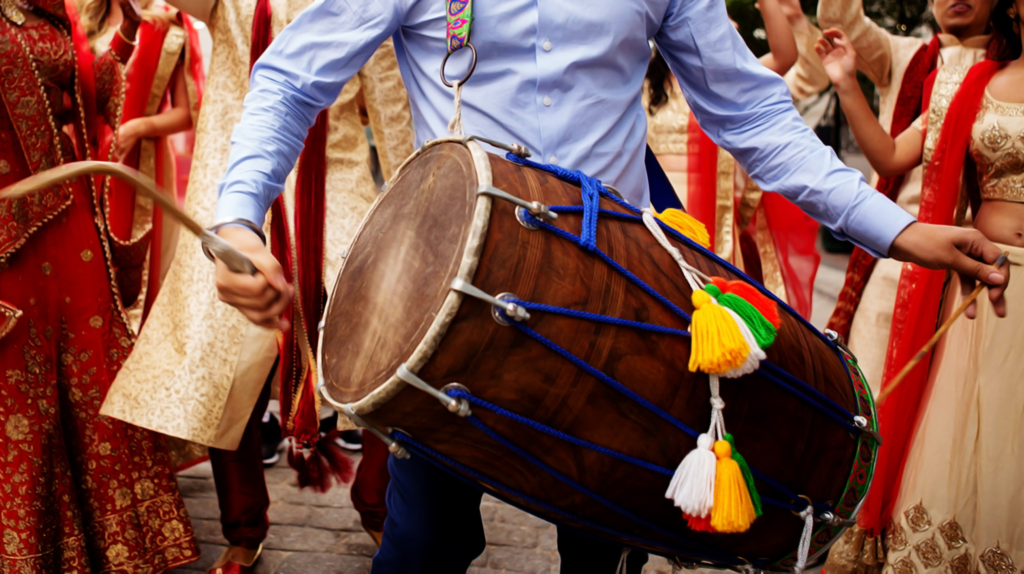
The baraat is one of the most joyful and energetic traditions in a South Asian wedding. With music, dancing, and a celebratory procession welcoming the groom, it sets the tone for the day.
Planning a baraat in the United States, however, involves logistics and local regulations that differ from celebrations in India. With thoughtful planning, you can preserve the excitement and cultural significance while ensuring a smooth, stress-free experience.
Not all venues are familiar with baraats, making early coordination essential.
Ask your venue about:
Designated procession routes
Sound level restrictions
Timing limits
Crowd capacity guidelines
Safety requirements
Hotels, estates, and country clubs may have specific policies, so confirming details early helps prevent surprises.
If the baraat takes place on public streets or sidewalks, local permits may be required.
Depending on the township, you may need:
A procession permit
Police presence or traffic control
Noise ordinance compliance
Insurance documentation
Your planner or venue coordinator can help navigate local requirements.
Traditional baraat arrivals can be adapted beautifully in the United States.
Popular options include:
Groom arriving on a decorated horse
Luxury car or vintage vehicle
Dhol-led walking procession
Baraat buses or shuttles
Modern DJ carts with speakers
Choose an option that suits your venue, guest count, and comfort level.
Work with Experienced Baraat DJs and Dhol Players
Music drives the energy of the baraat.
Look for professionals experienced with South Asian weddings who can:
Coordinate with venue timing
Manage sound levels
Create seamless transitions
Read the crowd’s energy
This ensures the procession feels vibrant yet well-managed.
Baraats often run longer than planned because guests are dancing and celebrating.
To keep the day on schedule:
Plan 20–30 minutes of procession time
Build buffer time into the timeline
Coordinate closely with ceremony start time
Communicate timing to key participants
This allows everyone to enjoy the celebration without feeling rushed.
Safety and comfort are essential, especially for large groups.
Consider:
Clear procession routes
Hydration during warm weather
Accessibility for older guests
Guidance for where guests should gather
Designated helpers to guide the group
A well-organized baraat keeps the focus on celebration.
Many non-Indian guests may be experiencing a baraat for the first time. To help them feel included:
Include a brief explanation in the program
Have the DJ or emcee invite participation
Encourage dancing and celebration
Share cultural significance with guests
This creates a joyful and welcoming experience for everyone.
A baraat in the United States may look different from one in India — and that is perfectly natural. The spirit of celebration, music, and joyful welcome remains the same.
With thoughtful coordination, your baraat can feel vibrant, meaningful, and unforgettable.
Nikhaar works with couples and families across Philadelphia, South Jersey, Delaware, and Maryland to coordinate seamless baraat processions that honor tradition while ensuring smooth logistics and guest comfort.
Contact us to begin planning your celebration.
© 2026 Nikhaar Weddings & Events | All Rights Reserved.